Nearly a decade in luxury hospitality. 100+ resorts personally visited. Here’s where we’d actually stay with kids.
Six in the morning, and the reef off the villa steps is already awake. Your seven-year-old spots the first turtle before anyone has finished a coffee.
The Maldives still gets filed under honeymoons, but that picture has changed quite a bit. More resorts now cater thoughtfully to families, with good kids’ clubs, activities, and plenty for children to enjoy in and around the water. For families, that can make a week in the Indian Ocean surprisingly easy and relaxing - especially when you choose the right resort and get the practical details sorted before you go.
This guide covers how to choose a family resort, how transfers work with children, things to do in the Maldives with kids, what to pack, what the whole trip costs in 2026, and the islands we would book for our own families.
Quick Answers Before You Book a Maldives Trip With Kids
• Best months: December to April for the calmest, clearest water. June to October for manta rays in Baa Atoll and much lower rates.
• Transfers: seaplanes fly in daylight only, roughly 6am to 4pm. Speedboat islands in North and South Malé Atoll run around the clock.
• Kids’ clubs: most open at age 4. Niyama’s Explorers club has a dedicated group for ages one to three, which is rare in the Maldives.
• Real cost: most resorts now quote rates with taxes included. Transfers are the cost to plan for, and on a seaplane island they can run to several thousand dollars for a family. Unless the child is 2 yrs old and under, it is free of charge
• Our top three for families: Soneva Fushi, Finolhu resort, and Niyama Private Islands.
Is the Maldives Good for Kids?
Yes. The Maldives suits families with children of almost any age. Lagoons are shallow, warm and calm all year. Resort islands have no cars and no through traffic. Most properties run a free daily kids’ club. The planning work is choosing the right island and the right transfer, not deciding whether to go.
One resort per island changes how a vacation feels with children. There is nowhere for a child to wander off to. Sea temperature sits around 27 to 29°C every month of the year, so nobody gets cold and nobody argues about getting out. Staff numbers are high, and resort staff are genuinely warm with small children instead of politely tolerant.
Families who book this trip usually want the same thing: one week where nobody is managing logistics. No driving, no packing the car, no waiting in line for anything. Parents get quiet mornings and a spa hour. Children get a reef, a bike and a club they actually want to go back to. That is the trade you are buying, and it is why the long flight keeps being worth it. For a shorter overview first, read our guide to family adventures in the Maldives.
The natural wonders alone do a lot of the work. Hermit crabs scuttling across the sand outside a beach villa will hold a two-year-old still and quiet for longer than anything you packed. Children get the trip of their lives, and the adults still get a romantic vacation folded inside it, which is the balance most parents are really buying. Many of the islands that work for a Maldives honeymoon work just as well once there are children in tow.
The flight is the honest downside. From the US East Coast you are looking at 20 hours or more with a connection through the Gulf, Europe or Asia. From Western Europe it is closer to 10 to 12 hours direct. Build in a recovery day at either end and the trip works. Try to do the Maldives with kids as a five-night dash from North America and it will not.
When Is the Best Time to Visit the Maldives With Kids?
December through April is the driest, calmest stretch, with sea temperatures of 27 to 29°C and underwater visibility often past 25 meters. June to October brings more rain, far lower rates, and manta ray season at Hanifaru Bay. Both windows work well for families. Our month-by-month view of the best time to visit the Maldives has the rest.
December to April: The Easy Window
This is the dry northeast monsoon. Flat water, light wind, reliable sun. It is the simplest period for young children, first-time snorkelers and anyone prone to seasickness on a speedboat. It is priced to match, and December, January and February are the peak weeks of the year. School vacation land squarely inside this window, so book six to nine months out for the dates you actually want.
June to October: Manta Season and Lower Rates
The southwest monsoon brings showers instead of washouts. Rain in the Maldives tends to arrive hard and leave quickly, and every kids’ club has a rainy-day program ready to run. What you gain is the marine event of the year. Hanifaru Bay in Baa Atoll fills with reef manta rays from May to November, peaking roughly July to October, with sightings strongest around the full and new moon. Visits are snorkel only, guided, capped at about 45 minutes in the water and around 80 people per day. Scuba is not permitted inside the bay.
Whale sharks are a separate calculation. South Ari Atoll has them year-round, which makes it the steadiest bet for families who want that encounter without gambling on a season.
How to Choose a Maldives Family Resort
Pick the island before the villa. Five things decide a family trip: the kids’ club age range, the quality of the house reef, whether the villa sleeps everyone properly, what the meal plan actually covers, and the transfer. Get those five right and the rest sorts itself out.
1. Check the Kids’ Club Age Range First
Most Maldives kids’ clubs start at age four. If your child is younger, the club is not available to you and you are paying for one-on-one babysitting instead. Confirm the age in writing before you book.
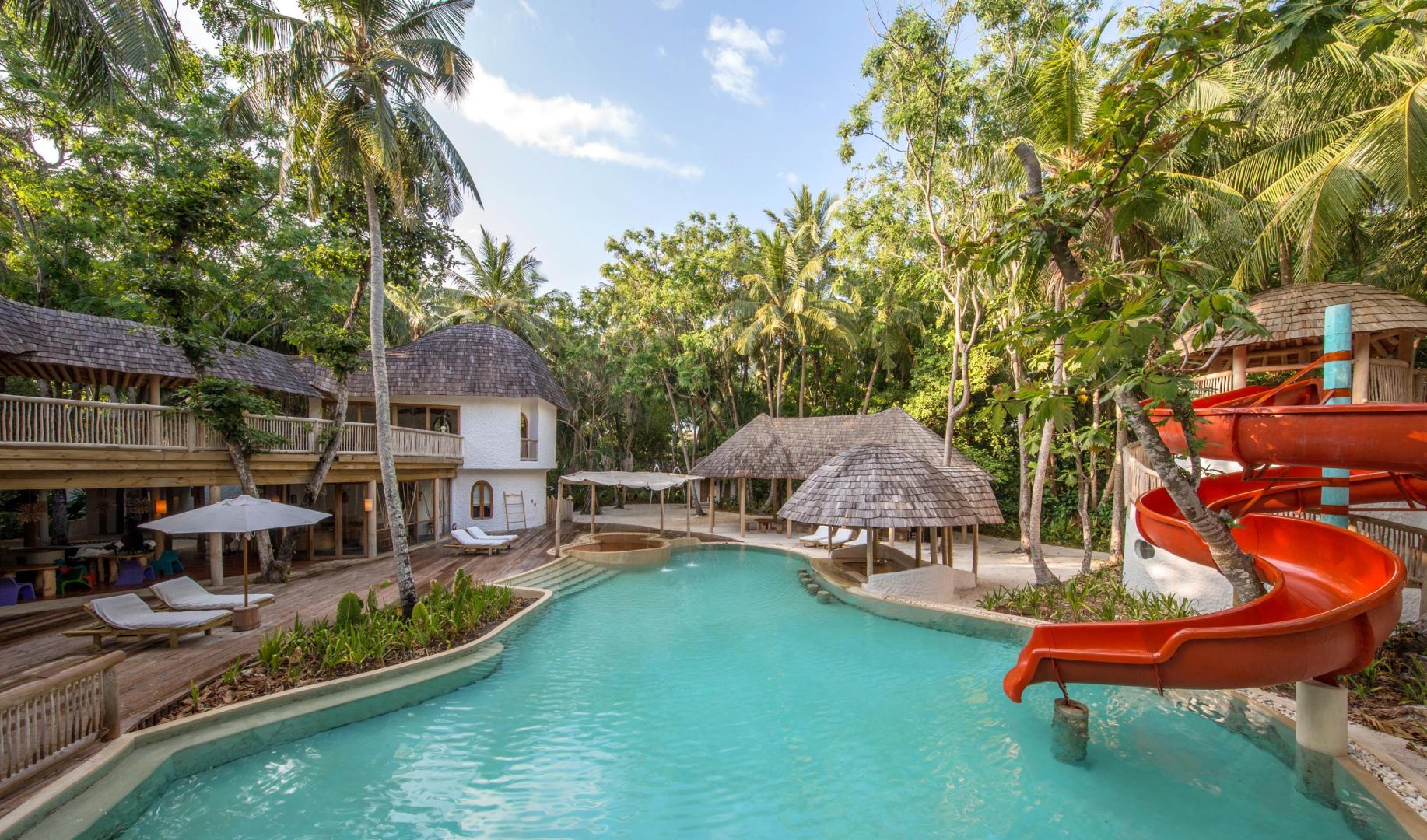
• Soneva Fushi’s The Den covers ages 4 to 17 and is included in the stay. It is a technology-free space with a pirate ship, a music room, a Lego room, a library and a cinema. Under-fours are welcome with a parent, and one-on-one babysitting is available.
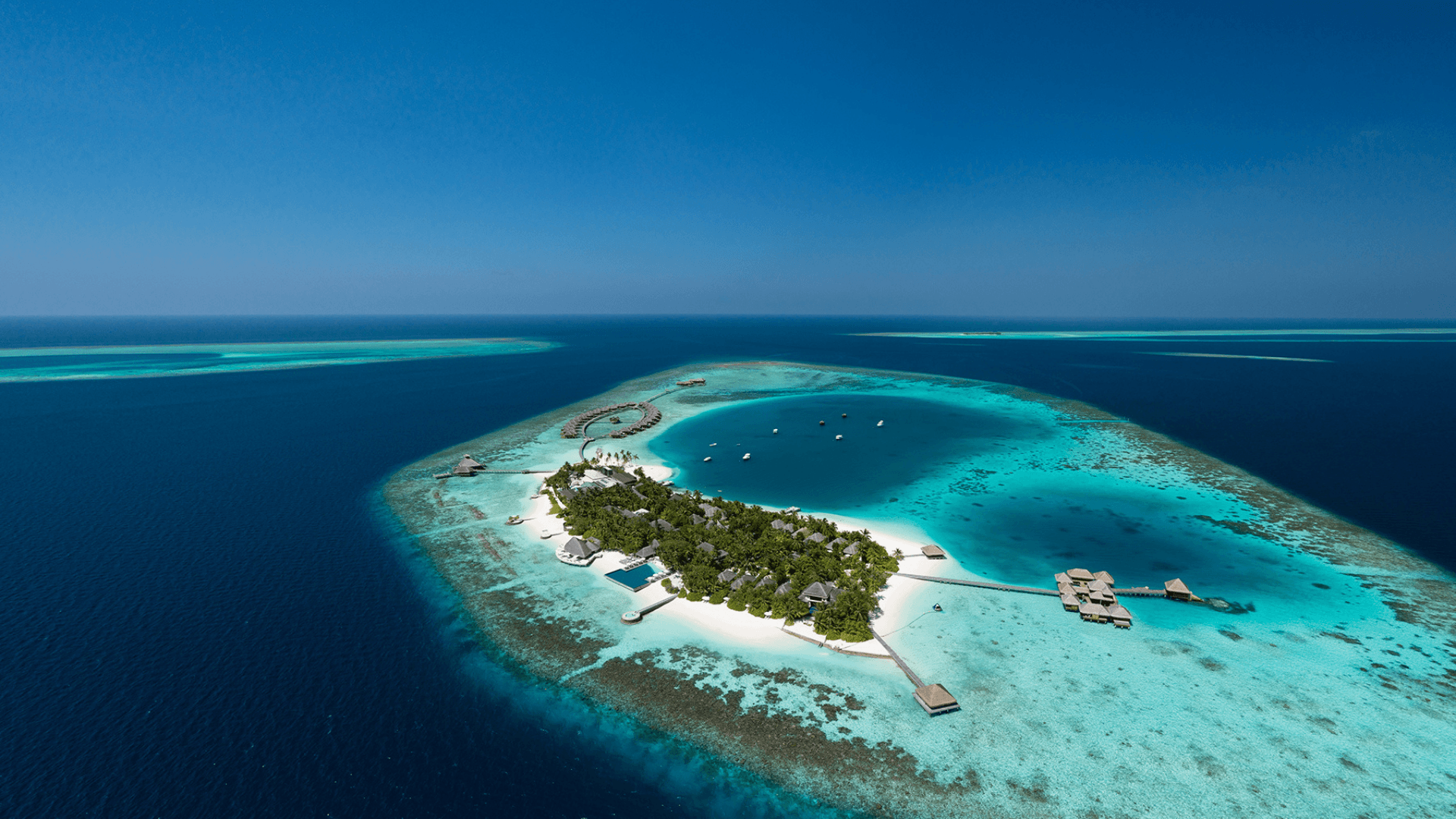
• Finolhu Maldives in Baa Atoll runs the Oceaneers Club for younger children, with an Art Lab for painting and pottery, cooking sessions and guided water excursions. Teenagers aged 12 to 17 have the Teens Hut, a two-storey space with games consoles, a mocktail bar for mixology classes, a movie lounge and an upstairs music studio with karaoke and DJ equipment.
• Niyama Private Islands has a dedicated Explorers group for ages one to three. Very few Maldives resorts offer supervised care that young.
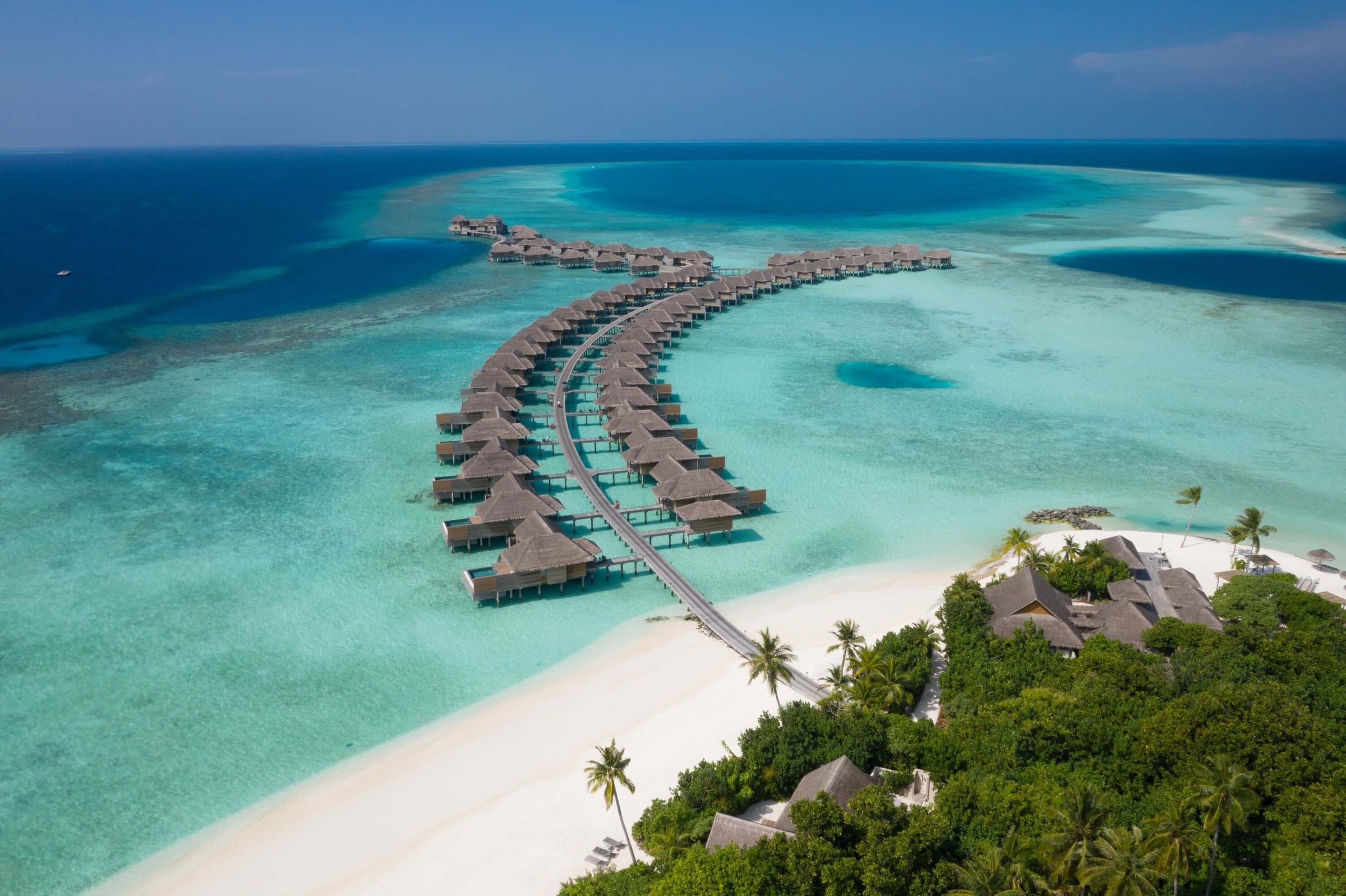
Vakkaru Maldives splits the job in two: the Parrotfish Club for ages 3 to 12, and the Coconut Club, a 24-hour teen space with pool tables, table tennis and foosball. For a fifteen-year-old that is the ultimate vacation hangout, and it buys parents an hour of alone time without negotiation.
Daily programs at the better clubs run on simple, repeatable things: coconut painting and volleyball games, treasure hunts, shell art, cooking sessions. At Four Seasons Kuda Huraa the club sits among lush tropical gardens a few steps from the sand, so nobody is walking far in the midday heat.
2. Ask About the House Reef, Not the View
A live reef straight off the beach is the single biggest difference between a good family island and a great one. It means children can snorkel before breakfast with no boat, no schedule and no cost. Ask two specific questions: how far is the reef drop-off from the shoreline, and is there a shallow, sandy entry the children can walk in from? Some famously beautiful islands sit in a big empty lagoon with the reef a long swim away, which is fine for adults and useless for a six-year-old.
A live house reef means tropical fish within a few strokes of the beach. Calm, shallow water on the lagoon side is the perfect place to teach a nervous child to snorkel, since they can stand up the moment they want to.
3. Villa Type and Sleeping Arrangements
A two-bedroom beach villa nearly always beats one overwater villa with a rollaway bed jammed in. Beach villas put the sand and the shallow water directly outside the door, and many come with a fenced private pool. Ask what the resort supplies as standard: cots, playpens, bottle warmers, high chairs, child-size robes and slippers, nappies, pool fencing, stroller loan. Four Seasons at Kuda Huraa, for instance, stocks in-room infant amenities including a crib, stroller, bottle warmer and toiletries, and offers infant menus in every restaurant.
Two examples worth knowing. LUX* South Ari Atoll has six Family Lagoon Pavilions, two-bedroom villas of roughly 130 square meters that share one entrance and open onto the lagoon. These Pavilions were built for families with babies and small children, with direct beach access and enough separation that a teenager still gets a door to close. Heritance Aarah does the same job with its two-bedroom Family Beach Villa.
Also ask how the living area works for sleeping. Some villas have a daybed that easily becomes a child’s bed, while others rely on a rollaway set up for the night. That one detail decides whether four people sleep comfortably or spend the week working around a bed in the middle of the room.
4. Meal Plans Matter More With Children
All-inclusive means something different at every Maldives resort. At some it covers every restaurant, premium drinks and in-villa dining. At others it covers one buffet and nothing else, and every meal your family actually wants to eat is a surcharge. Three questions to send before you book: which restaurants are included, do children under 12 eat free, and is in-villa dining on the plan? That last one matters on the night a jet-lagged toddler cannot make it to dinner. Our roundup of Maldives all-inclusive resorts shows how differently these plans get built.
Variety is better than the setting suggests. Heritance Aarah runs Sri Lankan cooking at Ambula alongside Mediterranean and Middle Eastern menus, and the strongest resorts write children’s menus that mirror each restaurant instead of defaulting to nuggets everywhere. A child who can order mango sushi at the Asian restaurant feels included at dinner, which matters more than it sounds on night four. It is part of what separates one all-inclusive plan from another.
5. Island Size
Bigger islands give you more restaurants, bikes and room to spread out. One&Only Reethi Rah runs to 44 hectares with 12 separate beaches, which is a lot of island for children to claim as their own. Smaller islands mean shorter walks with a stroller and a quieter week. Neither is better. Match it to the ages you are traveling with.
Seaplane or Speedboat? Maldives Transfers With Kids
Seaplanes operate in daylight only, roughly 6am to 4pm, so your international flight needs to land by about 2pm to connect the same day. Speedboat islands in North and South Malé Atoll run 24 hours with no cutoff. With young children or a late arrival, a speedboat island removes an unplanned overnight in Malé.
This is the detail that trips most families up. A cheap late-night flight into Velana International can cost you an airport hotel and half a day of your stay. Check the seaplane window against your flight times before you confirm anything. Our guide to Maldives arrival, transfers, packing and the rules worth knowing covers the airport side properly.
What Transfers Cost in 2026
• Speedboat: roughly $300 to $1,300 per adult, round trip.
• Seaplane: roughly $500 to $1,500per adult, round trip, and higher for far atolls.
• Children aged 2 to 11 usually get 30 to 50% off. Infants under two are normally free on a parent’s lap. From age two, a child needs their own seat.
Practical Notes for the Seaplane Leg
• Seaplane baggage allowances are lower than your airline’s. Trans Maldivian Airways lists 25kg per person, made up of 20kg checked and 5kg hand luggage. Infants may get no separate allowance at all.
• Keep a full day of supplies in carry-on: nappies, formula, medications and a complete change of clothes.
• There can be a one to three hour wait at the seaplane terminal as the flight is grouped. The aircraft are small, hot on the ground and loud. Ear protection are worth the space.
• Southern atolls such as Gaafu and Addu sit beyond seaplane range. Those resorts use a domestic flight followed by a speedboat, which means another airport, another take-off and another luggage handover.
First time? What to expect on arrival walks through the Velana terminal step by step, which takes most of the nerves out of the first two hours.
One small thing to look forward to: it is tradition for Maldives resorts to meet guests at the jetty with a fresh coconut to drink. Expect your children to ask for a second one before the luggage reaches the villa.
INSIDER TIP: Ask the resort for the realistic total door-to-villa time, not the airborne time, and ask in writing what happens if your international flight is delayed past the seaplane cutoff. Good properties will already have an answer and a hotel held.
Still weighing a seaplane island against a speedboat island? That one comes down to your flight times, your children’s ages and how much of the budget you want sitting in transfers instead of the villa. It is the question we get asked most, and it is quicker to talk through than to read through. Ask a VUE curator which side of that call fits your family.
Are Overwater Villas Safe for Kids in the Maldives?
Overwater villas can work with children, with conditions. Many resorts fit deck netting, gates and child locks on terrace doors when asked in advance. For toddlers, a beach villa with a fenced pool is the simpler answer, and it puts shallow water and soft sand directly outside the door.
Parents who have done it consistently make the same point: an overwater deck is no more dangerous than a hotel balcony, and you would not leave a two-year-old alone on either. Set the rules on day one, ask for the safety kit before arrival, and confirm what the resort actually fits, not what the website implies. Our pick of the top overwater villas in the Maldivesshows how much the layouts vary.
One approach that works well: split the stay. Start in a beach villa so everyone finds their feet and the children get comfortable in the water, then move overwater for the last two or three nights. Soneva Fushi’s Water Reserves add a slide from the deck straight into the ocean, which for most children settles the argument entirely. Here are the other Maldives resorts known for water slide villas.
A few properties set a minimum age for overwater categories, though many will still welcome younger children if a parent signs a waiver. Ask the resort what its policy is before you book.
For toddlers, pick a beach villa instead of an overwater bungalow and the whole question disappears.
The Best Maldives Family Resorts We’d Actually Book
Our family shortlist: Soneva Fushi and Soneva Jani for barefoot freedom, Niyama Private Islands for toddlers and surf, One&Only Reethi Rah and Velaa Private Island for space, and Anantara Dhigu for the easiest arrival. Every property below sits in our Maldives collection, and our wider list of the best luxury resorts in the Maldives for 2026 has more.
Soneva Fushi, Baa Atoll
Jungle paths, no shoes, and one of the largest children’s clubs in the country. The Den is technology-free and included in the rate for ages 4 to 17. Soneva Academy runs longer courses for ages 12 and up on stargazing, marine life and plastic pollution. The house reef is properly alive. Bring the snorkel before coffee.
The Den has a dedicated kitchen for cooking classes, a craft and activity room, and a pirate-ship playground outside that pulls in every child on the island within an hour of arrival.
Soneva Jani, Noonu Atoll
The quieter sibling, set on a lagoon that looks unreal in person. Water slides from the villa deck into the sea, a retractable bedroom roof for stargazing, and the same barefoot philosophy. Good for families with slightly older children who will use the water all day. Torn between the two islands? We compare Soneva Jani and Soneva Fushi side by side.
Niyama Private Islands, Dhaalu Atoll
Two connected islands, one called Play and one called Chill, which tells you most of what you need to know. The Explorers club takes children from age one, which almost nothing else here does. Niyama is the Maldives surf resort, with a break off the island and lessons for older kids and teenagers.
For families who want an island escape with some energy in it, this is the one. It sits alongside our other Maldives resorts worth trying this year.
One&Only Reethi Rah, North Malé Atoll
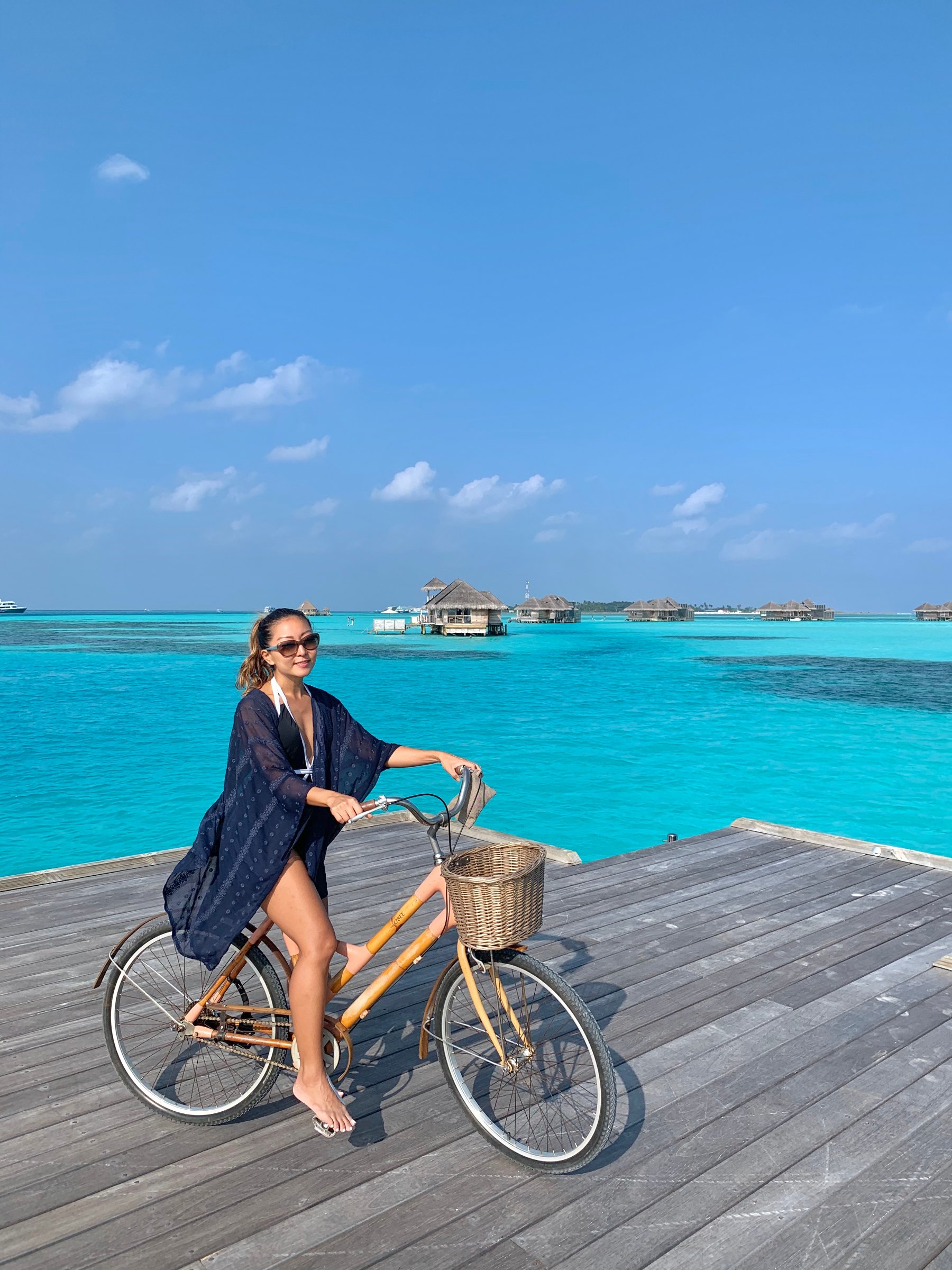
Forty-four hectares and twelve beaches, so children can cycle off and find their own patch of sand. KidsOnly runs a full program for ages 4 to 11. Big villas, big lagoon, short speedboat from the airport.
Velaa Private Island, Noonu Atoll
Children are greeted with their own welcome gifts and their own activity plan. The kids’ pool, waterpark and indoor play area are among the largest in the Maldives, and the kitchen will happily feed a child who eats four things. Strong on personalized detail: child-size robes, mini spa treatments, homemade purées for babies.
Anantara Dhigu, South Malé Atoll
Thirty-five minutes by speedboat. Land at any hour and be in the villa the same evening. A wide, shallow lagoon that is close to ideal for small children learning to swim and snorkel, plus a good watersports operation for teenagers.
Other Family Picks on Our List
Vakkaru Maldives in Baa Atoll, The Ritz-Carlton Maldives at Fari Islands and Patina Maldives at Fari Islands in North Malé, Waldorf Astoria Ithaafushi, Joali Maldives, Six Senses Laamu, LUX* South Ari Atoll for year-round whale sharks, Heritance Aarah in Raa Atoll, with a two-bedroom Family Beach Villa and the Koka kids’ club;InterContinental Maldives Maamunagau, which has three-bedroom lagoon residences; and Meyyafushi Maldives in Lhaviyani Atoll, where every villa has its own pool.
Things to Do in the Maldives With Kids
Most of the best things to do in the Maldives with kids happen within fifty meters of the beach. Snorkeling the house reef, coral planting, sandbank picnics, paddleboarding across a flat lagoon. The bigger outings, manta snorkels, surf lessons and night fishing, are worth building the week around.
• Snorkel the house reef before breakfast. Calmest water, fewest people, most fish. Children who are nervous in open water do far better with a sandy walk-in entry and a parent alongside.
• Plant coral on a frame. Four Seasons runs one of the most successful coral propagation projects in the world, and families can attach fragments to a frame and then track their reef online after they get home. It gives children a reason to care about what they are swimming over.
• Snorkel with manta rays at Hanifaru Bay. May to November, peaking July to October, from a Baa Atoll resort. Snorkel only, guided, about 45 minutes in the water, capped at roughly 80 visitors a day. Best around the full and new moon.
• Take a sandbank picnic. A short boat ride to a bare strip of sand with a picnic basket, shade and nobody else on it. This is the photograph the children will remember.
• Learn to surf. Niyama has the break. Four Seasons Kuda Huraa runs a surf school that takes children from age six.
• Try scuba in the lagoon. PADI Bubblemaker sessions start at age eight and happen in waist-deep water. Older teenagers can complete open water certification during the stay.
• Go out on a dhoni at dusk. Sunset dolphin cruises and hand-line night fishing on a traditional boat. Simple, cheap, and children love both.
• Watch a movie on the sand. Open-air movie theater under the stars is standard at the better family islands, and it solves the last hour before bedtime.
• Play on land as well as in it. Non-motorized water sports, cycling, snorkeling, soccer and volleyball are among the traditional activities families do together at Six Senses Laamu. Taj Exotica Resort and Spa runs various water sports alongside its kids’ club and pool, which suits a group with a wide age spread.
• Eat under the sea. Conrad Maldives Rangali Island and OZEN LIFE MAADHOO both have an underwater restaurant. At OZEN LIFE MAADHOO, a family day at the undersea restaurant, M6m, is part of the all-inclusive plan, so children can join you beneath the lagoon. Children tend to remember the tunnel of fish long after they have forgotten the food, and lunch seatings are the easier booking with a family.
• Watch the water light up. Families staying in Raa Atoll, at Heritance Aarah, often take an evening boat out to see the bioluminescent plankton that glows along the shoreline of nearby Vaadhoo Island. It is weather-dependent and worth asking about on arrival.
What a Maldives Family Trip Actually Costs in 2026
Most resorts now quote their rates with taxes and service charges included, so the price you see on the resort’s website is usually close to what you will pay for the villa itself. The cost that catches families out is getting there. Transfers are rarely included in the room rate, and on a seaplane island they can add several thousand dollars for a family. Our breakdown of how much a Maldives trip costs works through a full budget.
A Sample Budget: Family of Four, Seven Nights
• The villa: taxes and service charges are usually included in the quoted rate. Children under two at check-in are also exempt from green tax.
• Transfers: roughly $300 to $1,000 for the family round trip on a speedboat island, or from around $1,400 to $5,000 on a seaplane island, depending on the atoll. For two adults alone, seaplane transfers can run up to around $3,000.
• Meal plan supplements, child meal charges and any excursions sit on top of all of the above.
What to Pack for the Maldives With Kids
Pack for sun, salt water and a long flight. Reef-safe sunscreen, rash guards, snorkel masks that actually fit small faces, ear protection for the seaplane, and cover-ups for Malé. Resorts stock diapers and baby gear, but rarely the brand you use at home.
• Reef-safe mineral sunscreen. Several Maldives resorts restrict chemical sunscreens on the house reef and sell their own. Bring enough for the week and skip the resort prices.
• UPF rash guards and sun hats with neck flaps. The sun sits almost directly overhead at the equator. Long-sleeve rash guards do more work than reapplying sunscreen on a squirming four-year-old.
• Water shoes. For reef entries and hot sand at midday.
• A day of supplies in carry-on. Seaplane baggage is capped and infants may get no allowance, so assume your checked bag may arrive on a later flight.
• Motion sickness remedies. For the speedboat leg. Back seats absorb far less motion than the front.
• Modest cover-ups. Swimwear is fine on resort islands. Shoulders and knees should be covered in Malé, Hulhumalé and any inhabited island.
• A small first-aid kit, and peace of mind. Every resort has a clinic on the island, so help is close by even at 2am. Pack a few basics for reef cuts and stings, plus anything your family always relies on
• Less than you think. You will live in a bathing suit for the entire stay, and the resort covers most of the rest. Resist the urge to pack buckets and shovels; every family island already has them.
Ask the resort what the weather has actually been doing in your travel month instead of relying on an annual average. A packing list built for the wrong half of the monsoon is a miserable way to start a vacation.
Maldives With Kids: Multigenerational Trips and Special Diets
Multigenerational groups do well in the Maldives, mostly since everyone can do something different on one small island and still eat dinner together. For dietary needs, the rule is simple: email the resort before you book, not after you arrive. If your group spans very different travel styles, choose your Maldives adventure is a useful starting point.
Traveling With Grandparents
Two and three-bedroom villas and private residences let three generations share space without sharing a bathroom. Soneva Fushi, One&Only Reethi Rah and Velaa Private Island all have residences built for this. For older travelers, transfer logistics matter more than villa size. Seaplanes are boarded up a small ladder, and speedboat docks can be awkward in swell. Raise mobility needs at the booking stage so the resort can arrange assistance, and pick a short speedboat transfer over a long seaplane day.
Halal-Conscious Families
The Maldives is a Muslim country. Fish, which is the main locally sourced protein, is halal by default. Meat and poultry are almost entirely imported, and when sold to the local population and on inhabited islands must be halal-certified. Resorts import for international guests, so a shared kitchen may handle both halal and non-halal items. Ask three specific questions: is there a separate halal kitchen or dedicated preparation area, is there a prayer room or Qibla marker, and what is the alcohol policy on the island? Heritance Aarah and Ayada Maldives are both well set up for Muslim families, with villas and pools that give real privacy. Ramadan and Eid travel needs its own conversation about suhoor timing and iftar service.
Vegan, Vegetarian and Allergy Families
Plant-based dining in the Maldives has improved sharply. Sun Siyam Iru Veli has a well-known plant-forward menu, and LUX* South Ari Atoll carries vegan and vegetarian options across all of its restaurants. For allergies, send the full list to the resort before booking and ask the executive chef to confirm in writing, not the reservations inbox. On a private island there is no shop down the road, so anything they cannot handle is a problem for the whole week.
Which Maldives Resorts to Skip When Traveling With Kids
Some of the best-known islands in the Maldives do not take children at all. Anantara Veli is adults-only and does not provide cribs or extra beds. Hurawalhi sets a minimum age of around 15. Kudadoo has 15 villas, no children’s club and a per-child fee that runs into four figures per night. Confirm the age policy in writing before any deposit.
This is not a small footnote. Adults-only islands are rarer in the Maldives than in the Caribbean, which is exactly why families assume every resort takes children and occasionally book one that does not.
FAQ – Planning a Maldives Trip With Kids
What Is the Best Age to Take Kids to the Maldives?
Any age works, and there is a real advantage to going early. Children under two usually eat and fly for free, and many resorts also run offers where children up to 12 stay and eat for free, which makes the trip noticeably kinder on the budget. Babies and toddlers are very manageable on a speedboat island with a beach villa. From four, most kids’ clubs open up and children can snorkel properly, which opens up the best part of the destination. The age that needs most thought is one to three, where club access is limited and a resort like Niyama, which takes children from age one, is worth the extra research.
Do Children Get Bored in the Maldives?
Rarely, and less than parents expect. A live house reef, a kids’ club running a daily program, bikes, a pool, watersports and an open-air movie theater fill a week comfortably. Boredom tends to happen on small islands with a poor reef and no club, which is why the island choice matters more than the villa. Teenagers do best where there is surf, scuba or a real marine biology program instead of crafts.
Teenagers want a vacation hangout of their own, somewhere with a door and no adults in it. The resorts that separate a teen club from the younger children’s club get noticeably better reviews from families with a wide age gap.
Is the Water Safe for Young Children?
Maldives lagoons are shallow, warm and usually flat, which makes them among the gentlest swimming conditions anywhere. Sea temperature stays around 79–84°F year-round. The things to watch are sun exposure, coral cuts on reef entries and currents at channel edges, which is why resorts run guided snorkel trips instead of letting guests swim out to a drop-off alone. Water shoes and a rash guard deal with most of it.
Do Maldives Resorts Provide Baby Equipment?
Most good family resorts do, at no charge, but you must request it at booking, not on arrival. Standard items include cribs, high chairs, bottle warmers, playpens, bath toys, child-size robes and pool fencing for villas with private pools. Diapers and baby toiletries are often stocked too, though brands will not match what you use at home. Confirm the full list in writing.
Can Children Fly on a Seaplane in the Maldives?
Yes. Infants under two travel free on a parent’s lap. From age two a child needs their own seat and pays a reduced fare, usually 30 to 50% below the adult rate. Seaplanes fly in daylight only, roughly 6am to 4pm, so the constraint is your international flight time instead of your child’s age. Families who would rather skip it entirely should choose a North or South Malé Atoll island reachable by speedboat.
Do Kids Stay Free in the Maldives?
Some resorts run kids-stay-free and kids-eat-free offers, usually for under-12s sharing with two adults, and often tied to a minimum stay of four or seven nights. These offers rarely cover transfers, and green tax is still charged from age two. Read what the offer excludes as carefully as what it includes, and price the whole trip instead of the room.
How Many Nights Should We Book in the Maldives With Kids?
Seven nights is the sweet spot. The transfer day at each end costs you a day in practice, so a five-night booking becomes three usable days. Longer stays open up the better rate structures and the free-transfer offers, which are frequently gated at four or seven nights.
Reef and no schedule. That is the whole appeal of this place, and it holds up just as well with a six-year-old in the water next to you.
Limited rooms at these rates, always. Talk to a VUE curator who has stayed on the island you are considering, and book the family villa before the school vacation dates go.
Browse Maldives family stays in the VUE Collection
What a VUE Family Said About Their Maldives Trip
“I was nervous initially having never used a booking agent before but Sue and Jenn’s patience and flexibility ensuring our entire group of 6 had their needs met was outstanding. We stayed at Heritance Aarah in November 24 - the best vacation of our lives.”
Alice M. Read full review
Meet Our Team
With nearly a decade of experience in luxury hospitality and more than 100 resorts visited firsthand, our team knows what makes a stay truly exceptional. We draw on our collective experience to curate exceptional stays and help you discover resorts worth experiencing.
Not sure which resort is right for you?
We offer complimentary concierge consultations by phone or email. Let our team know your preferences, and get a personal recommendation tailored to your wants and needs.
[ Get a Personal Recommendation → ]